Wednesday, 1 May 2013

Principles of Open Access and Open Access Publishing: the module is ready!

Today sees the launch of Queen Mary University's RDF100 module ‘Principles of Open Access and Open Access Publishing’.  The module is listed under ‘Learning Support / Library’ in QMplus and has been designed to give postgraduate and early career researchers a practical overview of the principles of Open Access (OA), specifically open access publishing of research output. Topics covered include: the history and principles of OA and debates surrounding it; funder mandates on OA and tools to support researchers with compliance; copyright and licences in relation to author rights and user permissions; guidance on publishing a paper in Open Access publications; and institutional tools that support researchers in making their research output OA.

It is possible to login as a guest and not be a QM user, though some features will then be inaccessible (the quizzes, for example). Happy reading!

Tuesday, 30 April 2013

RCUK has changed their open access guidelines for the second time this year


Released in July 2012, the original policy announced that there would be short embargo periods for green open access: 6 months in the sciences, and (temporarily) 12 months for humanities and social sciences. In response, publishers argued that they could lose library subscriptions. The Lords Science and Technology Committee criticized the policy:
 
RCUK did not consult or communicate effectively with key stakeholders in the publishing and academic communities when implementing its open access policy…There are still many unknowns concerning the impact of the open access policy, which is why RCUK must commit to a wide ranging review of its policy in 2014, 2016 and before it expects full compliance in 2018. We heard significant concern about the policy’s ‘one-size-fits-all’ approach, and are pleased that RCUK are both aware of these concerns and prepared to act on them.”

RCUK’s initial revisions, released on 6 March, 2013, were not met with much enthusiasm. These changes included longer embargo periods for green open access: a more-satisfying-to-publishers-timeframe of 24 months.

Also integrated into the revised regulations was a decision tree produced by the Publisher’s Association. This stipulated that – if APC funds were available via the universities - authors should always choose the gold route over green.


The decision tree was criticized as “confusing”, with publishers and the RCUK disagreeing about what exactly was meant. This bewilderment was the catalyst for further amendments, released on 8 April, 2013, which still included the decision tree but conceded that gold was preferred but not required. Further changes are described in the Times Higher Education article “RCUK Changes Open-Access Guidance Yet Again”. 

RCUK is now saying that they will consider various issues relating to the embargo periods, for instance, disciplines might need varying time to implement embargos and general policy changes.  They have also released an FAQ pertaining to the policy and have stated that “further points on the policy made by stakeholders will be considered as part of the 2014 review”.


Does OA Give A Citation Advantage? (Still debating, 7 years later...)


It is a debate that has been going on since 2006: does open access increase citations?

First up was Gunther Eysenbach’s “Citation Advantage of Open Access Articles”, which provided data comparing OA and non-OA articles from the same journal within the first 4-16 months after publication. Eysenbach found that “OA articles are cited earlier and…more often than non-OA articles…there seems to be an advantage in terms of immediacy…but also in terms of total impact”.

Matter settled, right? 

Not so much.

Monday, 22 April 2013

Sweetly Spreading The Word

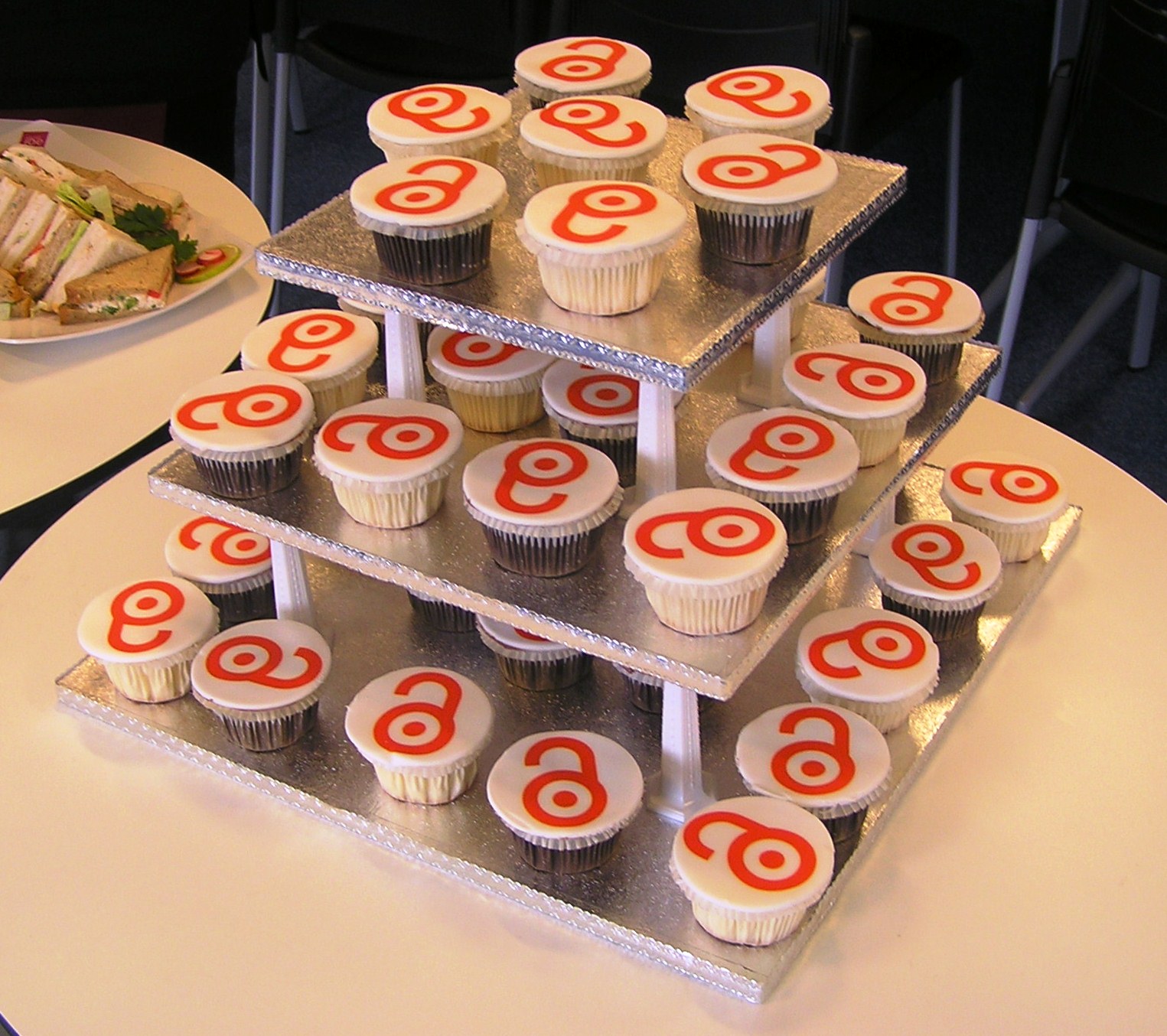
Open Access Team Officer Daphne Dashfield is spreading the word about open access, and she comes bearing cupcakes. (We're told that they were delicious.)

Thursday, 14 March 2013

Open Access Transition project update - Publications Service pilot

Open Access Transition activities have been moving on apace here at QM, with the team working on a series of workstreams to provide enhancements to current services, identify potential new ones, and put in place procedures for accessing Publications Funds.  With the project end date looming, there is still a lot of work to be done, and some activities that will continue to be undertaken going into April.

Piloting an enhanced Publications Service

From checking journal open access publishing to a survey of needs within the Queen Mary research community, the Publications Service was set the objective of identifying what support researchers might need in order to under the new Research Councils policy on open access, and what additional services or information needs they might need.  The majority of this work has fallen into two sections:

Survey and one-to-one meetings

We launched a survey in February 2013 to gain insight into researcher understanding of, culture and engagement with open access, in particular open access publishing, the survey was agnostic of funding organisation and targeted both research staff and students.  We asked about researchers' familiarity with our very own institutional repository, Queen Mary Research Online, hoping to measure how much work is still needed to raise awareness here, how to engage with it, and how it meets funding requirements in many cases.  Lastly, we asked an open-ended question, as a steer for future endeavours in this area.  The question:  If we were able to offer a full handling service for the publication of journal articles and conference papers, including submitting and acting as a go-between to manage the progress of papers through the publication process, is this something you would want?  

The survey is now closed and we are still analysing the results.  Headline (anonymised) results will be published shortly.

Thank you to everyone who provided information via the survey.

A second line of enquiry in the information gathering part of the Publication Service pilot, was to hold one-to-one meetings to get into a little more detail about researcher reaction to the changes announced by Wellcome and Research Councils UK, how they felt this would affect them, what their own plans are to meet these new policies, and how they will use services available to them.  These were quite illuminating, and seem to demonstrate a broader acceptance of the value of open access, with plenty of caveats and misunderstandings, particularly around the rhetoric that has been published in the national press, and other fora.

The results from these meetings is being converted into a narrative about the perceptions of open access and will be used to provide anecdotal evidence in conjunction with the survey results.

Compliance checking, 

At the beginning of 2013, the OA transition team began putting out a call to researchers asking for examples of journals that they felt would be a high priority for them to target for publication.  We received many responses to this call, and have been working on long lists of titles, attempting to interpret the information made available by publishers about open access publishing options, reuse permissions, and self-archiving permissions.  A significant undertaking, this has proved both depressing in some instances, confusing in many others, but rewarding overall.  We now have a better understanding of the current position, taking into account recent updated announcements from RCUK and Sherpa Services, and the varying information publishers have been putting out about pending changes to their policies.  Given the rather fluid nature of the open access landscape at the moment, some simple guidance about where to check and how will be provided shortly, and there will be ongoing support from Library Services handling enquiries on an ad hoc basis.


Friday, 15 February 2013

Where Open Access Publishing is coming from and where it's going to.


The SOAP (Study of Open Access Publishing) project 


Outlining and analysing the world of open access publishing – from what publishers offer to what researchers want – SOAP was a two year project, which ended in 2011, coordinated by the European Organisation for Nuclear Research (CERN) in partnership with libraries (The Max Planck Digital Library), funding agencies (UK Science and Technologies Council), and major open access publishers (Sage, Springer, BioMed Central).

An invaluable undertaking, SOAP described and analysed open access publishing by comparing and contrasting business models for a better understanding of the marketplace as well as the opportunities and risks associated with open access publishing. It also conducted a large scale survey that investigated the European Research Area (ERA) scholars’ requirements for scientific publishing.

Delivered in three main phases, SOAP provided a fact based impartial platform for public debate on Open Access publishing and the sustainable future of scholarly communication. The three phases consisted of:

I. Examining existing ‘fully’ Open Access publishing and corresponding business models including hybrid;

II. Assessing international demand for Open Access publishing across disciplines;

III. Comparison of offer, supply and demand with further analysis of the opportunities and results.

The SOAP repository provides a useful overview of the developments and debates which informed this study and provides a fascinating qualitative and quantitative insight into attitudes, desires and practices surrounding the drivers and barriers in the transition towards Open Access.


Thursday, 14 February 2013

Open Access for the People!

Yesterday brought about the launch of PeerJ, a peer-reviewed, open-access journal that offers paid-for-life subscriptions. There are three plans: $99 and it allows for them to publish one paper a year; $199 for two papers a year; and $299 will give you unlimited publications per year.

Academic publishing is pretty much locked-down by the four big companies these days: Springer, Elsevier, Wiley, and Taylor & Francis. All four companies charge minimally $1000 - author processing charges vary journal-by-journal - but often climb toward $2000 or $3000. 

Peer J isn't the only new journal trying to make open access a bit less financially grim, Open Library of Humanities and eLife have both launched during this past month. eLife is, like PeerJ, for science and biomedical research whereas OLH is aimed at humanities and social sciences. eLife is currently APC-free, while OLH is aiming to offer a low-APC service.