Showing posts with label Export. Show all posts

Thursday, 16 May 2013

Open Access and the Costs and Benefits for Scholarly Associations as Small Publishers

In their article assessing the future of academic publishing, Beverungen et al. claim that “the global market for professional, social science and humanities publishing [is] worth close to $10 billion”[1]. Furthermore, they state that
Reed Elsevier, John Wiley & Sons (including Blackwell), Springer Science + Business Media, Wolters Kluwer, Holtzbrinck and Informa (including Routledge and Taylor and Francis) are the biggest professional journal publishers with a market share of 36% in 2009[2].
The profit levels in academic publishing range between 30-40%, which is a margin unheard of in almost any other commercial sector[3]. These levels of income are based on the confluence of costless labour (editorial work, proof-reading, copy-editing, marketing and promotion, original copy creation, etc.), with the subsidy provided by public higher education funding for the authors living costs, the cost of journal subscriptions, individual and/or institutions paying for scholarly association membership. This means that public funding is paying multiple times, at a number of different points along the production process, for the cost of producing any given article.

The shift to open access publishing is a rationalisation of the current model of multiple payments across the publishing process to a single payment at the beginning. For scholarly associations, this shift in income stream can appear as a dire threat to their existence. In order to explain that open access does not threaten the scholarly association as such, I will now examine some of the economic implications for these bodies.

The summary of the Economic Implications of Alternative Scholarly Publishing Models report, by John Houghton, Charles Oppenheim et al., outlines where the costs fall in the subscription based, open access and self-archived repository models for scholarly communication.

They open with the statement that “advances in information and communication technologies are disrupting traditional models of scholarly publishing, radically changing our capacity to reproduce, distribute, control and publish information”[4]. By examining the costs and benefits of alternative models for research publications this report advocates that the long-term reduction in cost for accessing research will offset any transitional costs in implementing open access.

The authors of the report argue that any given scholarly communication follows 5 key moments in its life cycle:
i.                     Fund research and research communication;
ii.                   Perform research and communicate the results;
iii.                  Publish scientific and scholarly works;
iv.                 Facilitate dissemination, retrieval and preservation; and
v.                   Study publications and apply the knowledge.[5]

For the authors of the report
This extended scholarly communication process model provides a foundation for a detailed identification of the actors, activities, objects, and functions of involved in the entire scholarly communication process[6].
The mapping of the process of scholarly communication enables a thorough understanding of how to account for the costs and benefits of certain models of production. The report concludes by stating that
It seems likely that more open access would have substantial net benefits in the longer term and, while net benefits may be lower during a transitional period they are likely to be positive for both open access publishing and self-archiving alternatives (i.e. Gold OA) and for parallel subscription publishing and self-archiving (i.e. Green OA).[7]
The report outlined the following about the current publishing ecology:
  • The estimated average cost of producing a scholarly article (this includes costing the author's time spent writing, the cost of managing peer-reviewing processes, as well as publisher related costs, etc.) is said to be £9600.
  • The same calculation applied to monographs produces the amount of £88,600 per publication.

The economic benefits of moving to open access manifest in the following ways[8]:
  •       The cost of being active in the field of scholarly publishing is equivalent to around £5.4 billion in the UK in 2007.
  • The cost of having had all of the research output of 2007 published via an open access route would have been £1.2 billion. 
  • Therefore, moving to a totally open access model would potentially save £4.2 billion per year (based on 2007 figures).

The shift to open access, whilst incurring transitional costs as well as shifting towards an author pays model, will result in a longer term reduction in the costs of subscription payments. This will free substantial amounts of money for financing research itself. The burden will shift away from the current pressure on institutions to pay for expensive subscription costs.

John Willinsky outlines the stakes at play for the scholarly association, with regard to the emergence of the trend towards open access
The scholarly association has been at the heart of academic journal publishing and it now faces a critical decision around which path to take. Although many journals operate independently of these associations, these organisations represent the vast majority of researchers, reviewers, and editors, in their efforts to advance the state of scholarship and research. While many scholarly associations have turned their journals over to commercial publishers, a small, but still significant, number of associations are offering complete or partial open access to their publications.[9]
Due to the rising prevalence of electronic journals and their use in delivering open access content, Willinsky states that
The scholarly associations need to rethink their role and services, rather than holding on as long as possible to a publishing model whose time may well be passing. This is the time to bring the scholarly and economic, the ethical and intellectual, aspects before the membership, as the change in publishing mediums could well alter the nature of the scholarly association.[10]
Wallinsky offers up an example of what a shift to open access would mean for the financial or economic realities for the scholarly association;
If a $100 is lost in subscription revenues with open access publishing and as much is cut from publication costs or made from a different source, the net effect is no change to the association’s resources. As it turns out, the average publication cost is $874,897 (including newsletters, brochures, etc., as well as the journal), while the average publishing revenue recouped by the associations is $659,159.[11]
The overall costs of running the publishing for a scholarly association is not fully recouped by the pay for access output of the association. With the introduction of open access, and the reduction in costs of production it will cause, the association has the possibility to offset the losses from the ending of journal subscriptions. In his article, Willinsky produces a table outlining the costs involved in scholarly society publications.

The economic changes that the introduction of open access may have upon small, scholarly press will not only alter the business model for scholarly societies, but can also result in the transformation of these bodies into something new.

For Beverungen et al., the transformation of scholarly communication in general creates opportunities to mutate the model for delivery of scholarly research. They outline 4 possible avenues where new models of communication may emerge:
  • Open access repositories
  • Fair trade publishing
  • University presses
  • Self-organised open publishing

These 4 models are equivalent to the following 4 styles of delivery:
  • The depositing of original research into open access repositories.
  • The making of payments to authors for their works by the academic publishers.
  • Reducing costs of production by moving publishing ‘in-house’ to the universities themselves. 
  • Harnessing the ‘free labour’ of academics already required under the current system, but side-stepping the publishing industry by implementing an independent publishing culture with completely cost independence access at its heart.[13]

There is, as such, no hard-and-fast reason to follow any assumption that the 4 styles of delivery are mutually exclusive. Rather, understanding them as part of an ecology of processes that reinforce, or wax and wane, in relationship to each other allows us to conceive of a strategic direction for the creation of innovative forms of scholarly communication.

For example, the current Research Councils UK mandate requires all publicly funded research to be published as open access and under a creative commons licence. Under this new regime, once an article has been published it can be republished in another format. Universities could harness their own institutional repositories by encouraging academics and students to self-organise the creation of publications drawing upon the open access output held within. It could also be possible to divert small amounts of funding in order to give access to early career academics and research students to important paid career development opportunities.

By doing this, the researchers would be able to use the prestige and/or recognition of institutions and/or departments to generate interest in the works outside of the traditional publishing structures. This would, over time, shift the balance towards the self-organisation of publishing by researchers, thus making academics determine the distribution and recognition of ‘impact’ without cost presenting itself as a barrier for either authors or readers.


[1] (Beverungen et al., 2012: 931)
[2] (Beverungen et al., 2012: 931)
[3] (Beverungen et al., 2012: 931)
[4] (Houghton and Oppenheim et al, 2009: 1)
[5] (Houghton and Oppenheim et al, 2009: 2)
[6] (Houghton and Oppenheim et al, 2009: 2)
[7] (Houghton and Oppenheim et al, 2009: 14)
[8] (Houghton and Oppenheim et al, 2009)
[9] (Willinsky, 2005: 5)
[10] (Willinsky, 2005: 21)
[11] (Wllinsky, 2005: 14)
[12] (Willinsky, 2005: 7)

Monday, 22 April 2013

Sweetly Spreading The Word

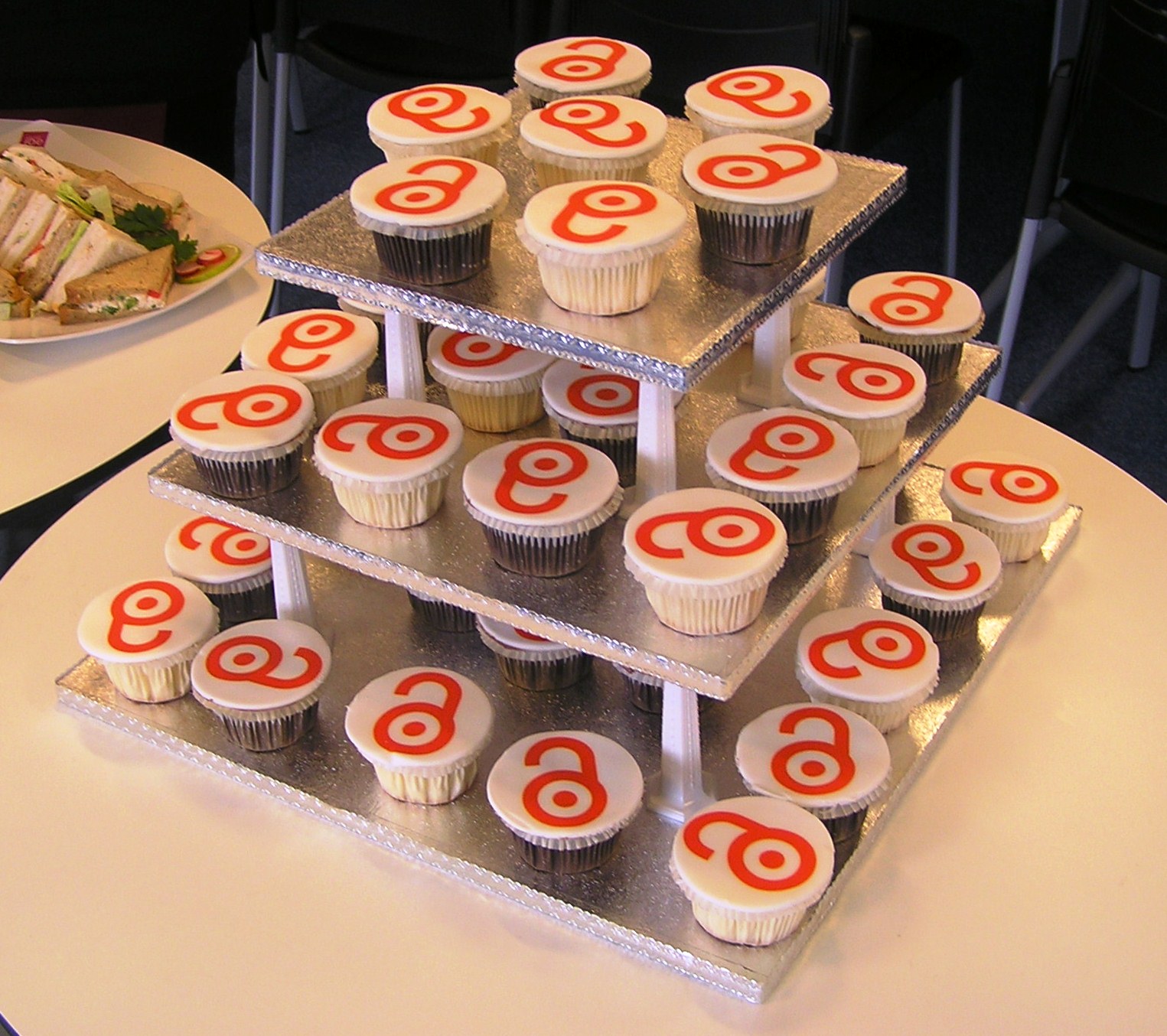
Open Access Team Officer Daphne Dashfield is spreading the word about open access, and she comes bearing cupcakes. (We're told that they were delicious.)

Thursday, 14 March 2013

Open Access Transition project update - Publications Service pilot

Open Access Transition activities have been moving on apace here at QM, with the team working on a series of workstreams to provide enhancements to current services, identify potential new ones, and put in place procedures for accessing Publications Funds.  With the project end date looming, there is still a lot of work to be done, and some activities that will continue to be undertaken going into April.

Piloting an enhanced Publications Service

From checking journal open access publishing to a survey of needs within the Queen Mary research community, the Publications Service was set the objective of identifying what support researchers might need in order to under the new Research Councils policy on open access, and what additional services or information needs they might need.  The majority of this work has fallen into two sections:

Survey and one-to-one meetings

We launched a survey in February 2013 to gain insight into researcher understanding of, culture and engagement with open access, in particular open access publishing, the survey was agnostic of funding organisation and targeted both research staff and students.  We asked about researchers' familiarity with our very own institutional repository, Queen Mary Research Online, hoping to measure how much work is still needed to raise awareness here, how to engage with it, and how it meets funding requirements in many cases.  Lastly, we asked an open-ended question, as a steer for future endeavours in this area.  The question:  If we were able to offer a full handling service for the publication of journal articles and conference papers, including submitting and acting as a go-between to manage the progress of papers through the publication process, is this something you would want?  

The survey is now closed and we are still analysing the results.  Headline (anonymised) results will be published shortly.

Thank you to everyone who provided information via the survey.

A second line of enquiry in the information gathering part of the Publication Service pilot, was to hold one-to-one meetings to get into a little more detail about researcher reaction to the changes announced by Wellcome and Research Councils UK, how they felt this would affect them, what their own plans are to meet these new policies, and how they will use services available to them.  These were quite illuminating, and seem to demonstrate a broader acceptance of the value of open access, with plenty of caveats and misunderstandings, particularly around the rhetoric that has been published in the national press, and other fora.

The results from these meetings is being converted into a narrative about the perceptions of open access and will be used to provide anecdotal evidence in conjunction with the survey results.

Compliance checking, 

At the beginning of 2013, the OA transition team began putting out a call to researchers asking for examples of journals that they felt would be a high priority for them to target for publication.  We received many responses to this call, and have been working on long lists of titles, attempting to interpret the information made available by publishers about open access publishing options, reuse permissions, and self-archiving permissions.  A significant undertaking, this has proved both depressing in some instances, confusing in many others, but rewarding overall.  We now have a better understanding of the current position, taking into account recent updated announcements from RCUK and Sherpa Services, and the varying information publishers have been putting out about pending changes to their policies.  Given the rather fluid nature of the open access landscape at the moment, some simple guidance about where to check and how will be provided shortly, and there will be ongoing support from Library Services handling enquiries on an ad hoc basis.


Friday, 15 February 2013

Where Open Access Publishing is coming from and where it's going to.


The SOAP (Study of Open Access Publishing) project 


Outlining and analysing the world of open access publishing – from what publishers offer to what researchers want – SOAP was a two year project, which ended in 2011, coordinated by the European Organisation for Nuclear Research (CERN) in partnership with libraries (The Max Planck Digital Library), funding agencies (UK Science and Technologies Council), and major open access publishers (Sage, Springer, BioMed Central).

An invaluable undertaking, SOAP described and analysed open access publishing by comparing and contrasting business models for a better understanding of the marketplace as well as the opportunities and risks associated with open access publishing. It also conducted a large scale survey that investigated the European Research Area (ERA) scholars’ requirements for scientific publishing.

Delivered in three main phases, SOAP provided a fact based impartial platform for public debate on Open Access publishing and the sustainable future of scholarly communication. The three phases consisted of:

I. Examining existing ‘fully’ Open Access publishing and corresponding business models including hybrid;

II. Assessing international demand for Open Access publishing across disciplines;

III. Comparison of offer, supply and demand with further analysis of the opportunities and results.

The SOAP repository provides a useful overview of the developments and debates which informed this study and provides a fascinating qualitative and quantitative insight into attitudes, desires and practices surrounding the drivers and barriers in the transition towards Open Access.


Thursday, 14 February 2013

Open Access for the People!

Yesterday brought about the launch of PeerJ, a peer-reviewed, open-access journal that offers paid-for-life subscriptions. There are three plans: $99 and it allows for them to publish one paper a year; $199 for two papers a year; and $299 will give you unlimited publications per year.

Academic publishing is pretty much locked-down by the four big companies these days: Springer, Elsevier, Wiley, and Taylor & Francis. All four companies charge minimally $1000 - author processing charges vary journal-by-journal - but often climb toward $2000 or $3000. 

Peer J isn't the only new journal trying to make open access a bit less financially grim, Open Library of Humanities and eLife have both launched during this past month. eLife is, like PeerJ, for science and biomedical research whereas OLH is aimed at humanities and social sciences. eLife is currently APC-free, while OLH is aiming to offer a low-APC service.

Wednesday, 23 January 2013

Blog-watching

More articles on Open Access that the Transition Project Team have found interesting:

Mounce, Ross. The Gold OA Plot.
A visualization of different publisher’s OA permissions.

Van Noorden, Richard. Mathematicians Aim to take publishers out of publishing.
Mathematicians are creating a series of free open-access journals that are backed by funding through the French government.

Taylor, Mike. Hiding Your Research Behind a Paywall is Immoral.
Taylor’s opinion piece on open access as it relates to science papers.


Neylon, Cameron. OA and the UK Humanities & Social Sciences: Wrong risks and missed opportunities
 A scientist working for the Science and Technology Facilities Council reflects on the impact of RCUK open access publishing policy for Humanities and Social Science researchers.


Holcombe, Alex O. and Matthew Todd. Free for all: ARC-funded research now open to the public
Australian Research Council (ARC) implements an open access publishing policy for those researchers in receipt of funding.

Creative Commons Licenses


Creative Commons is a non-profit organisation that enables the sharing and use of creativity and knowledge through free legal tools. Their free copyright licenses provide a simple and standardized way to give the public permission to share and use an author’s creative work — on conditions set by the author. 

From 1 April 2013, Research Councils UK and Wellcome Trust ask researchers who produce work as a result of research being funded by them, to publish papers in open access journals using a CC-BY license or equivalent. A CC-BY-NC license or equivalent is to be used for papers that are alternatively deposited in an open access institutional repository.

Attribution CC-BY:

You can:
  • share
  • copy
  • distribute
  • transmit
  • remix
a work for commercial purposes as long as you attribute the work.

Attribution-NonCommercial/ CC-BY-NC:

You can:
  • share
  • copy
  • distribute
  • transmit
  • remix
a work for non-commercial purposes as long as you attribute the work.

Tuesday, 22 January 2013

Blog Post Roundup: Learned Societies and OA

Links about the issues surrounding open access and learned societies.

Jump, Paul.  Open access will cause problems for learned societies' journals, accepts Finch
Dame Janet Finch admits that the new regulations that have been implemented because of her report’s findings could negatively impact learned societies’ journals.

Meadows, Alice. Open Access - What’s a Learned Society To Do?
Should learned societies do more to participate in the questions around Open Access?

Wilson, Emma.  A Learned Society perspective on Open Access publishing models.
The new RCUK regulations from the point of view from a member of a learned society.

Worlock, Kate. Open Access and Learned Societies.
General rundown of issues surrounding learned societies and open access.

Open Access Transition Briefings

On December 4th and 5th, Queen Mary University held briefing sessions to help researchers explain the upcoming changes in RCUK’s Open Access policy, answer initial questions, and to provide an outline of the work being undertaken by a Task and Finish group.


Initial Meetings

Date: 04/12/12 Time: 12:30-14:00 Location: Mile End Library, Seminar Room
Date: 05/12/12 Time: 11:00-12:30 Location: Mile End Library, Seminar Room
Date: 16/01/13  Time: 14:00-15:30  Location: Charterhouse Sq, Rotblat G.05

Briefings are being held for the Directors of Research and Principal Investigators from various disciplines. These presentations are on:

•    Understanding the Policy
•    Frequently Asked Questions
•    Developing a procedure:  
  • Task and Finish group
  • Funds allocation

Upcoming Meetings

Date: 22/01/13  Time: 12:00-13:30  Location: Mile End Library, Seminar Room
Date: 25/01/13  Time: 14:00-15:30  Location: Whitechapel, Garrod 1.21
Date:  11/02/13  Time: 11:00-12:30  Location: Mile End Library, Seminar Room

Booking is not required.

Monday, 21 January 2013

OA Transition Survey Launched

Open Access Survey Launched

The Library's Open Access Transition team have been approaching a number of academic colleagues to find out how they manage their OA publications. A short survey has been launched; it will review existing procedures for managing outputs accepted for publication. This is to identify any support the Library can provide to enable researchers to comply easily with their funders’ open access publishing mandates. We are interested in the views of all researchers, not only those funded by RCUK and the Wellcome Trust, so please take a few moments to complete the survey and give us a clearer picture of how we can help. All responses will be confidential.

At the end of the survey there is an opportunity to share comments or ask questions concerning Open Access and Queen Mary's intended response to RCUK and the Wellcome Trust's new requirements.

RCUK (the seven Research Councils) have recently announced changes to their Open Access policy starting on 1 April 2013; an outline of which can be viewed here.

The Wellcome Trust has already been supporting open access for output of research funded by the Trust.  However, from 1 April 2013, they too are expanding their open access publishing policies by stipulating that research output can be used for commercial purposes as well whenever a publisher has been paid an open access fee.  Their policy statement can be viewed here.

Queen Mary will receive a block grant to cover some of the Article Processing Cost (APC) of open access publishing for RCUK-funded projects; this block grant will be administered by the Library. Queen Mary Library also manages an institutional repository where researchers can deposit the accepted version of their paper.  In order to ensure that we administer funds efficiently for Gold access and to support researchers in self-archiving their papers for Green access, we will need to know early in the process when a paper is accepted and through which one of the open access routes it is going to be published.

Open Access Transition

The Open Access Transition team, based within Library Services, is overseeing the extension of services to support changes to open access policy announced by Research Councils UK and the Wellcome Trust in July 2012.  the project is due to be completed in March 2013 and is funded by a one-off pump prime funding grant from Department for Business, Innovation and Skills.

From 1st April 2013 Research Councils UK (RCUK) require that all peer-reviewed journal articles and conference papers arising from research funded in full or in part by RCUK Councils must be made open access, free at the point of use.

The Open Access Transition team will use the transitional funding to ensure that Queen Mary is in the best possible position to maximise the Open Access publication of research output. Our plan has five components:

•           Expanding our existing research publications services
•           Engaging with researchers and raising awareness of the RCUK and Wellcome policy
•           Reviewing existing processes and procedures for managing outputs prior to publication
•           Assessing the feasibility of new systems and processes for management of accepted publications
•           Development of an online training module for early career researchers and research students

Useful Links:

Friday, 26 October 2012

UK PubMed Central to become Europe PubMed Central - what you need to know

Day 5 of International Open Access Week 2012 is upon us, where has the week gone?  In the final of my blog posts about more general areas of the Open Access landscape in 2012, a little update on the changes to UKPMC coming soon.

For those in the Medical or Life Sciences, and those in the Humanities with a foot in one of these camps, PubMed Central (PMC), and in recent years UK PubMed Central (UKPMC), have become familiar entities.

Initially set up as a place where National Institutes of Health (NIH)-funded researchers in the USA would be required to deposit research outputs.  It has expanded in recent times, with the advent of UKPMC for UK researchers with Wellcome Trust funding, to take in research outputs from a much broader cross-section of the research landscape; this is partly as a result of the emphasis on inter-displinary research, meaning that there are lots of research outputs out there with a relevance to a much wider community as a whole.

This is set to change again from 1st November 2012, with the re-naming of UKPMC to Europe PubMed Central (Europe PMC).  This change comes in response to updated open access policies by the European Research Council, and its decision to use Europe PMC and ArXiv are its recommended repositories for the resultant research outputs.

So, newly funded projects from ERC, and I guess those already underway, now have a slightly second-hand, dusted off and renamed, Europe PubMed Central repository into which to deposit these outputs.  Most researchers already depositing, or having deposited on their behalf, outputs from their funding to UKPMC, won't notice much difference in the way that they interact with EPMC.  UKPMC+ accounts for depositing papers remain the same, but the relevant URLs to which you'll need to go will change from 1st November.

Europe PMC becomes http://europepmc.org
Europe PMC Plus (for depositing content) becomes http://plus.europepmc.org

QM Researchers - did you know that not all publishers deposit your output into UKPMC for you unless you have paid the OA article processing charge?  Some publishers deposit on your behalf, the accepted version of the paper, and others the published version.  But in a few cases, you have to do this yourself, and it's not always obvious that this is the case.  So, if you are funded by Wellcome Trust or ERC, and want to be absolutely sure you are compliant with your funding, drop us an email and we'll be happy to help.

Queen Mary Research Online staff can help with compliance questions, as well as any Liaison Librarian (or me of course):

qmro@qmul.ac.uk

or check out other contacts via the Library website

www.library.qmul.ac.uk/subject
www.library.qmul.ac.uk/openaccess


Tuesday, 23 October 2012

Open Access & the RCUK

Day 2 of International Open Access Week, and today is a focus on new RCUK policy being introduced from April 2013.

I attended an event at Birkbeck, University of London yesterday, at which Ben Ryan from EPSRC spoke about the new RCUK Open Access Policy, and how this will work from April 2013.  Below is my interpretation of what he said, my understanding of the policy and my personal response to these changes.

Background
RCUK announced its new Open Access policy in July 2012, with some headline changes that affect every RCUK-funded researcher.  The main changes/additions were:

  • Migration of funding for open access publishing from individual grants to PIs to a block grant awarded to institutions to be held in a central Publications Fund 
  • Requirement that all research papers published via the paid model (Gold), be licensed under Creative Commons CC-BY (thereby allowing re-use, including for commercial purposes, text mining, etc.)
  • Requirement that all research papers self-archived under the green route, be licensed under Creative Commons CC-BY-NC at the very least and be openly accessible no later than 6 months after publication (12 months for AHRC and ESRC-funded research papers in the short-term)
  • Open access policy now applies to doctoral students funded through RCUK programmes
  • A requirement that research data, generated as part of the project, be registered and accessible wherever possible

RCUK have had an open access policy, with variations on requirements between each council, for a number of years.  These changes are intended to streamline the policy across all councils thereby achieving a better and broader uptake of open access initiatives within the UK.  Much of the policy was written in tandem with the Finch report recommendations, and therefore expresses a preference for paid rather than self-archived open access routes.  Regardless of the response to Finch (don't get me started), and the focus on Gold (again, don't go there), the intention is still that a greater number of papers are openly accessible to all.  For RCUK, even taking into account their preference for gold, either route is acceptable, with the onus placed on authors and their institutions to make decisions as appropriate on a paper by paper basis.  Good luck managing all that workload (oh yes, that'll be my job...).

What does this mean for QM Library and Researchers, and other UK institutions?

So far agreement has been reached at QM that the Library will 'look after' the block grant, as well as the  Wellcome OA grant (more on this tomorrow), in addition to our allocation of OA credit with Royal Society of Chemistry, institutional memberships (PLoS) and those under consideration.  With this, and the need to communicate not only the changes coming into effect, but how this applies to researchers, and what services are available to support this, investment of time and staffing resource by the Library and Research Office will be required to engage with PIs and research project groups to find out what needs to be done.  To achieve this:

  • Efforts to engage with PIs to raise awareness of the changes will need to be stepped up
  • The setting up of a Publications Fund will need to be dealt with - a new thing for us - and communication to PIs about how to access it and when (see next point) arranged
  • Correspondence between PIs and the Library will need to be set up to ensure that papers are known about at the point when they are being prepared for submission
  • Better communication between the Library and PIs will be required to ensure authors know which titles in their discipline are compliant and they know who to ask if they are not sure
  • We will need to consider how best to apportion block grants to funded projects (if apportioned at all)
  • We will need to work with PIs and the Research Office during the grant application process to enable researchers to be data and OA compliant - and where to get help
  • We will need to provide training and guidance for new researchers
  • We will need to provide training for doctoral students  
  • Better monitoring of uptake and compliance within institutions and by RCUK will need to be put in place, follow up where there is consistent failure to comply be scaled up, and mechanisms for managing monitoring be extended

Do the benefits really outweigh the effort and the complexities that this will introduce?

Yes.

Setting aside the above; the need for more transparency in the way that OA charges are calculated; the willingness of researchers to make time and invest effort to get on board and understand what is being asked of them; the need for publishers to accept that they are going to take a hit to their business models and profits; the fact that learned societies haven't been considered carefully enough; that this only applies to journal articles in peer reviewed titles (and there is a whole other publishing world out there to consider); and the serious risk of failing to comply on some level at some stage - even inadvertently, the ultimate aim of these and other changes is that more publicly-funded research output be free at the point of use.

OA advocates always knew that the path to full Libre Open Access would be a difficult one, and that there were an awful lot of people to be convinced.  However, open access is now on some of the most influential agendas, not just in the UK but globally, and whilst we might not fully agree with the methods being introduced, the pace at which change is occurring, or the way that this change is manifested in policy and governance, as long as we remain engaged with these authorities and identify, lobby and are vocal about where these failings arise, we still are in a better position than a decade ago, we just have more work to do.


Monday, 22 October 2012

Why holding Open Access Week during REF dry-run is a good thing

This week is International Open Access Week, a time when OA advocates focus their efforts on the open access initiative and raising awareness of the benefits to a global audience.  This month is also REF dry-run for many UK institutions, it certainly is at QM.  In the last couple of years, the two have been almost impossible to reconcile, with the result that OA Week activities have floundered in the face of 'I'm too busy with REF dry-run to worry about it' rebuffs.

But, this is something that vexes me considerably.  REF dry-run is the time when researchers are asked to focus on the outputs and outcomes from their research, a time when they are actively encouraged to take stock of what they have produced, to 'take a breather' as it were from the job of actually doing the research to review the work that has gone before.  To select the best examples of their work to be submitted for assessment, on which their, and the institutions, future funding might rest.  In this sense, dry-run is the perfect time to be talking about Open Access, and working with (not providing more work for) researchers to enable them to get their OA compliance in order; do a little housekeeping to make sure that as much of their output is freely accessible as possible; reinforce and remind researchers of how different the landscape can and will be in the future; and perhaps provide some of those statistics on downloads we sometimes hold hostage.

This year's OA Week theme for me is compliance, and is pretty high on a lot of agendas.  So, with a rolling programme of blogposts on all sorts of OA-related things, I am also going to be doing some hard hitting feedback to academics.  Your compliance is the key to your future funding, that kind of thing.

Tomorrow sees the start of my Top of the QMRO Pops countdown.  Tune in tomorrow and the rest of the week to find out who has:
The most papers OA
The most downloads
Top 10 downloaded papers
School with the most downloaded papers
School with the most archived papers.

Hopefully, a few more researchers will become 'switched on' to the requirements placed on them, the help that's available, and that, with a little investment of time at the start, OA can pay huge dividends later on.

Happy Open Access Week, one and all!


Thursday, 9 August 2012

Open Access - Keeping the Big Picture in View

I've been thinking a lot of late about the Open Access movement, as I imagine many of my repository manager colleagues, researchers and research managers have.  The movement seems to have been hijacked recently by the triumvirate of Finch, RCUK and Wellcome.  So much of what these groups are trying to do is valid and valuable, but consistently only covers the very specific area of academic publishing that is journal publishing, and is therefore myopic when it comes to the true meaning of open research.

It would be too easy here to get lost down the rabbit-hole that is academic journal publishing and open access, but I actually want to think for a while about non-journal publishing.

Whilst it's true that most researchers publish some of their research output, to a greater or lesser extent, in academic journals, there is a wealth of scholarly knowledge out there that will never see the journal editor's desk.

Data (yes there is a lot of work in this area at the moment), software,  video recordings, audio recordings, images, webpages, blog posts, media interviews, collaborations, areas of expertise, and not forgetting the books, chapters, monographs, reports, working papers, etc. that make up the breadth of scholarly output generated by researchers.  Research funding bodies only talk in terms of the journal articles that may constitute part of the researchers complement of materials from any research project, perhaps with a bit of research data curation thrown in for good measure.  To lose sight of the full complement of scholarly output and the work of researchers does us no favours in advocating for a more open research environment, fixation with peer-reviewed output and metrics is not good research.  Perhaps what is really needed here is that institutionally we take a broader approach to supporting open scholarship, by providing support and mechanisms to perform, manage and disseminate that research, not just through provision of institutional repositories and research information systems but also through hosting of blogs and services to enable dissemination, hosting webpages that have the proper mechanisms for preservation through centralised provision, and endeavouring to provide that 'connectedness' that will enable researchers to point to projects to point to output to point to public engagement to point to impact...

Yet, even this does not go far enough in my mind.  What we really need, and what chimed so much in Cameron Neylon's keynote address at the recent OR2012 conference, was that connectedness taken further to engage not just researchers and research systems, but private individuals alike; that harnessing the power of the collective mind can fully realise the open research agenda and increase the rate of discovery.  But where to begin...

So, whilst we get bogged down attempting to understand that latest round of policy statements and changes, and how this impacts on our day-to-day tasks of engaging researchers with open access, I try keep in mind that it isn't just the selected best samples of that research that we are trying to gain greater access to, but the full, untidy, unedited, mass of the research in all its forms that we are aiming to share more widely, and for that we need more than OA policies from funding bodies, we need hearts and minds of researchers.


Tuesday, 31 July 2012

Open Repositories 2012 - highlights and take aways

One of the many things I always find when attending repository community events is the repository envy that usually accompanies it.  OR2012 was no exception.  My lovely, still pretty new, DSpace repository is as close to out-of-the-box as it's possible to be, with only a few minor tweaks.  This was partially intentional, with IT colleagues stretched and managing big systems needing time and resource, an open source repository (and its slightly unflattering interface in particular) is more than they can handle at the moment.  This is something I try to accept with the knowledge that most people find their way to content in the repository via Google or some other search engine, or via a harvester, so they're unlikely to see the homepage or care what the stylesheet looks like, ever.

What I did find this time though was my content envy kicking in (too many in this rather long post, but more to follow in due course).  Not just in terms of the quantity of content, but the types and diversity of content that some repositories (or digital libraries/commons') contained.  There is scope here for QM, with rare collections and Archives still only partially digitised, we have lots of potential to expand the type and quantity of our digital collections if we can find the time and resource for digitisation... but before I get lost down the 'if-only' rabbit hole, a quick look at some of the technological things that really stuck with me and some musings on how they might be useful.

Page turner plug-in

Embedded players for audio and video content have always been high on my agenda for our repository (should we ever be presented with with audio or video content I want to be prepared), but the page turner plug-in which made a fleeting appearance in Eric Robert James' (Yale University) presentation at RF6 - Lessons Learned, was really interesting and posed an opportunity for those with technical brains.  Is there potential not just to allow page turning within the repository interface, but also to embed this as a viewer within other webpages (such as publications lists) to enable viewers to go straight into reading the paper rather than having to follow the link to the repository and then download the file.  What impact would this have on viewing/download stats?  Does this also fit into the idea of the invisible repository that I have heard mention of during the course of the conference and attributed to William Nixon?

Metrics

One thing that many repository managers tell me is that they find researchers will be more engaged if they can get hold of use metrics, mentions, etc. of their work, once it has been made open access.  We've been making lots of efforts at QM to get our usage statistics in a row and get them out there for researchers to see, and I have also been following the discussion around Altmetric with interest and some ideas for implementation not just onto the repository but elsewhere where the content is exposed within the institution.

There was a positive and far-reaching response to Melissa Terras' recent blogging and tweeting at QM, with researchers wanting to both find out 'how she did it' and also wanting to get in on the act. If there's one thing that researchers will respond to it's another researcher demonstrating how successful a new innovation can be.  One of the many issues researchers identify as barriers to open access uptake is the loss of control over where their research is posted and downloaded from.  This isn't purely control of access to content and ideas (all tied up with concerns about copyright and plagiarism), but also about concerns over dilution of impact if the content is dispersed over a wide variety of sources.  As repository managers we have a responsibility to help researchers to find out not only where their content has been downloaded from, but also where it is being mentioned and how often.  Metrics have been on the agenda for a long time, with PIRUS and PIRUS2 looking to create article level metrics for institutional repository content, failing to get publisher buy-in (really, you do surprise me) and therefore going forward with IRUS - now part of the UK Repository Net+ initiative.  So there is still an enthusiasm for being able to deliver this information, and opportunities for repository managers and researchers to feed into these initiatives exactly what they would like them to be able to do.


eThesis submission with Sword 2.0

Managing submission of eTheses to institutional repositories was the focus of the project presented by Kristian Roberto Salcedo and Richard Jones for SWORDv2 solution for Norwegian master's thesis submission portal.  At QM we rely heavily on our colleagues in the Research Degrees Office to supply us with the finalised copies of the ethesis and then manually upload and create metadata for it.  Managing this process, allowing for the file to uploaded with minimal metadata by the student would make this much simpler but there is resistance here due to concerns over security and the need to manage embargo and sensitive data precautions.  Combined with better curation task management (see below) and bitstream embargo management (again below), this could be improved considerably.  The particular element to the Norwegian initiative that interested me was connecting the repository to the national student portal allowing students to submit their thesis in its varying iterations both prior to and post examination before finally making the thesis available when appropriate.  A fascinating piece of work both technically, and in terms of future policy making.

Curation tasks and bitstream management

Lots of us out there would like to be able to do more curation of the content that we have, deciding what is accessible, what metadata can be harvested, batch control and tidying of records...  It's a pretty lengthy list.  DSpace certainly doesn't have the full range of curation functionality that I personally would like, and implementing simple functions like management of embargoes and managing individual bitstream embargoes is difficult and bitty, in some cases it is impossible.  Batch management and tidying of metadata is already available for technical brains, but the expertise in the quality control rarely lies with technical heads and more likely rests with us repository managers (yes, many of us are Librarians and that's what we do best).  I was therefore encouraged to see a while back a tool developed by @Mire providing batch metadata management as an add-on to the user interface.    But there still seemed to be lacking the concept of managing multiple variations in embargo for file bitstreams associated with the same record, or that those multiple bitstream statuses could need to change over time.

All hail therefore two pieces of work presented at OR2012 that together could resolve these curation task issues.  The first was a presentation by Yanan Zhao, Kim Shepherd, Yin Yin Latt, S. Leonie Hayes facilitated by Elin Stangeland (University of Cambridge) from Auckland University, 'Curation Tasks for Repository Managers : Staying in the Light and have a Dark Side', demonstrating curation tools for managing the visibility and harvesting of individual bitstreams from within the admin interface to allow three statuses: Accessible, Accessible on campus only, Not accessible, and allowing these statuses to not only relate to specific bitstreams, but to be changed over time.  Some really impressive work and something I'd definitely like to look into further.

The second piece of work actually formed a much larger piece that was very impressive and has many features that would be of real interest down the line, but it was this specific part that interested me.    Marc Goovaerts presented on the 'AgriOcean DSpace' a 'Customized version of DSpace for agricultural and aquatic networks in parallel with developments at Hasselt University'.  This customised version allowed bitstream level setting of embargoes, something that would seriously improve the curation and management of content.  Unfortunately, in order to develop many of the functions now available within their AgriOcean DSpace (AOD) they can to hard code a lot of the these changes, meaning that they are not easily made shareable (drat!).  

What was really reassuring with all of these technical enhancements was that, DSpace is truly alive and kicking out there and people are doing some really exciting things with it, we just need to find ways for those things to become usable by others in the community (a topic for another post I think).

Monday, 30 July 2012

Open Repositories 2012 - Crowdvine, serial tweeting and the app deluge

So, still wrangling the notes from the various sessions I attended, and some of the ideas and projects I saw demonstrated, I thought I'd start with the technology.

OR2012 introduced Crowdvine and live blogging into the mix for this OR Conference, both of which are new to me, with no time beforehand to investigate the technology and familiarise myself with the interface I didn't really come to these until late in the conference - Thursday I think.  Luckily, Crowdvine turned out to be really easy to use, really easy to navigate, perhaps too easy... since I immediately posted a new discussion thread  - Highlights and things you're going to take home

Throughout the event, social media has played a significant role in allowing delegates, both physical and virtual, to keep track of the interesting things going on in parallel sessions, point to innovations of interest or things to highlight (oh and poke fun at each other but that's another post altogether).  A little competition is really healthy, and no more so than when some bright spark (@WilliamJNixon I believe) starts a Tweetpository and starts tracking the output of conference tweeters!  Finding out who had the most tweets for the event was no great surprise (@MrNick) but it was fun to find out how many serial tweeters are out there, and interesting to discover just how ubiquitous social media has become, oh and that I am not so serial a tweeter as I first thought having not made it onto the OR2012 Wordle.

The liveblogging was perhaps one innovation too far for me on this occasion, but it is something I'm open to and it was very entertaining to read the live blogs by colleagues in parallel sessions and find out what you've been missing.  Managing my tweeting and note-taking whilst still remembering to listen to the sessions was hard enough without the added stress of trying to live blog my random ramblings.  This is something to consider for next time though as it was a dynamic, if somewhat stream of consciousness style of note-taking.  Well done to those that did it, great effort.

This all reminds me that I am seriously behind in learning about new web-based technologies.  With so many developments and so much to learn it's hard to stay an 'early adopter', something I have always been proud to consider myself.  Unfortunately, with so many technologies and the plethora of apps and services out there now, we're not so much at risk of a data deluge as an app deluge...

But, the things I did successfully take up?  Taking my notes using Evernote.  This was actually a really good experience, with my notes syncing between laptop and iPad to make keeping everything together really easy; the ability to group notes together into a notebook, already organised by date, is making the process of pulling together notes, links and other 'stuff' from my week in Edinburgh really simple - though nothing has made it easy to digest all the things I heard about and thought about into things to talk about with my colleagues!  Formatting, bulletpoint-making and numbering your notes on the fly might not get many people excited, but I was one very happy lady on Monday morning when everything was ready and waiting to be exported.

I think I only scribbled down 1 page of handwritten notes the whole week - on the first day when coordinating my technology with my suitcase and other baggage was one step too far!!!  I'd had a 4am start - that's my excuse.


Monday, 9 July 2012

Open Repositories 2012

So, it's Open Repositories conference time again, and this year I actually managed to get here!  In previous years I have either been too late to apply, on maternity leave, or just unable to fit it into the mad schedule.

This year's conference is being held at University of Edinburgh, a favourite city for me, and with a packed programme looks to be a really good event.  I'll be tweeting from my attendance at various workshops, follow me @moragm23

First up today is an afternoon of Research Data Management with the DCC.

Tuesday, 5 October 2010

Importing publications into PubLists

With REF dry-run coming up, there have been lots of queries about using the file importer in PubLists to complete publications lists with items not collected automatically.  This should be simple and easy, once you have the right information.

  • The importer is under the 'my elements' tab 
  • Export the file from your reference software in RIS or BibTex format
  • Duplicates should be identified by the importer
  • Check your publications list afterwards to make sure everything has been imported correctly

Imported references show up as manual publications in PubLists and are therefore automatically approved.  They will, however, be flagged as 'unverified' until a member of the PubLists team has checked them for accuracy and completeness.

There is a guide under the help link in PubLists which shows you how to import and export in PubLists, for more information or further help email publists@qmul.ac.uk